


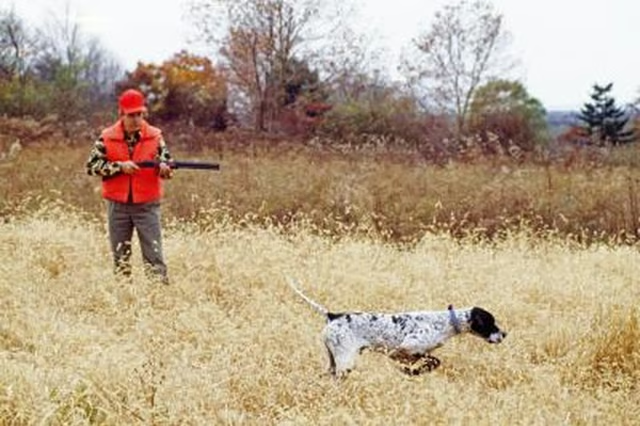
You know your pointer has picked up a scent when he drags you down the street for the run of your life, oblivious to your commands to stop. You really can't blame the dog -- his sniffer has a whopping 220 million olfactory receptors.
Air Scenting
English pointers are scenting machines on legs. They were selectively bred to hunt upland birds such as quail, pheasant, pigeons and woodcocks. Pointers have been considered a premier bird dog for a long time. Speed, endurance, a keen sense of smell and the ability to hold their position despite birds flying and guns going off collectively make pointers superior hunting dogs. Their ability to find birds dates back in time before guns where invented and hunters relied on nets, according to the American Pointer Club. These dogs mostly pick up scents wafting through the air, a hunting behavior known as "air scenting." In this case, upon picking up scent, a pointer will keep his head high and his nose in the air to locate its source.
Standing Still
When a trained pointer smells game, he will stand very tall and very still, according to DogTime.com. By standing still he is paying attention to the surrounding environment with every fiber of his being. If your English pointer has not received any formal training and is inexperienced in hunting birds, he may initially chase them. If he is allowed to chase several times, he will soon realize that "he missed the point" since the frightened bird flies away. Next time, upon picking up a scent, he will likely smarten up and try to stalk and pounce. Your ultimate goal is to get a dog to "whoa" and stand still upon picking up scent so he can safely get close to the birds without flushing them. Don't let your pointer develop an identity crisis: English pointers point while English springer spaniels flush.
Pointing
Upon picking up a scent, a pointer should automatically raise one foot off the ground and point in the direction he smells prey. There is nothing more natural in this breed than to point. Indeed, a pointer is capable of pointing at only 2 months of age, and the best part is that nobody has to teach him to do so; it's all based on instinct. "Pointing is a response to an olfactory cue that a bird is right here," explains Ed Bailey, an experienced field trial judge, award-winning writer and Gun Dog Magazine contributor.
Other Behaviors
If you are not using your pointer for hunting, you may notice different behaviors when he detects scent. Ignoring your calls and commands when his nose is in action is not uncommon with this breed. For safety sake, make sure you always keep your English pointer on leash or in a fenced yard; many pointers wander off as they follow their noses and run for long distances. Many pointers sadly end up in rescue facilities because they have wandered off never to be found by their owners.
