


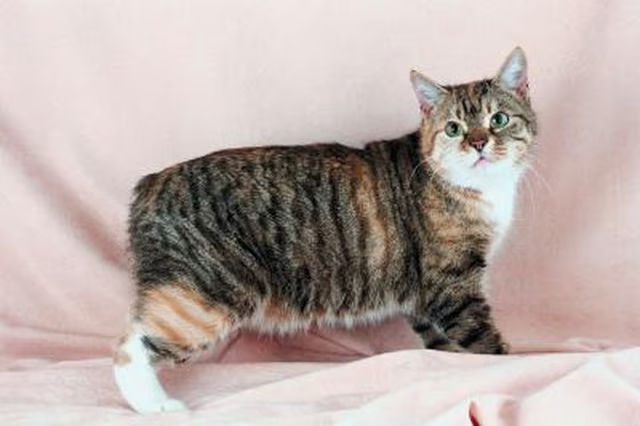
Even people who don't know cats recognize the tailless breed the Manx. The cat's taillessness results from a genetic mutation caused by a period of inbreeding on the Isle of Man. Sometimes this glitch causes spina bifida, or an exposed spinal cord. This defect is part of "Manx Syndrome."
Manx Syndrome
"Manx syndrome" refers to a range of disorders that affect the breed. Besides spina bifida these include fused, shortened or missing vertebrae; malformation of the pelvic or sacral bones; and paralyzed rear legs. Because of these congenital defects, affected cats might not be able to control their bladders and bowels. They might also suffer from constipation. Less affected cats can walk but have an odd, bunny-hop gait in the back. Kittens with Manx syndrome are usually euthanized. Normal Manx mother and fathers producing "Manx Syndrome" kittens should be taken out of the breeding pool to reduce the chance and heartbreak of producing more kittens with this affliction.
Spina Bifida
Kittens with spina bifida have improperly developed vertebrae in their spines. It can range from a serious deformity where euthanasia is the only humane alternative to relatively minor, noticeable only as a slight limp in the rear. In most cases, it's obvious that the spinal cord is exposed when the kitten is born. If the cord isn't completely exposed, you'll notice problems within a few weeks, when kittens begin walking. In less severe cases, a vet can confirm spina bifida via X-ray.
Kittens
Manx cats usually have smaller litters than ordinary cats, perhaps giving birth to only two or three kittens. There might have been additional kittens in the womb, but those kittens were homozygous -- inheriting the Manx gene from both mother and father. This genetic defect causes the fetuses to die early in their development. Surviving kittens are heterozygous, with only one Manx gene. They're not out of the woods yet. These are the kittens that might have Manx syndrome.
Purchasing a Kitten
If you're in the market for a Manx kitten, a reputable breeder usually will not let you take your kitten home before it reaches the age of 4 months. That's because, while spina bifida is usually obvious shortly after birth, that's not always the case. Some symptoms don't appear until a kitten reaches the 4-month mark, although this late onset generally means gait difficulties.
Always check with your veterinarian before changing your pet’s diet, medication, or physical activity routines. This information is not a substitute for a vet’s opinion.
