


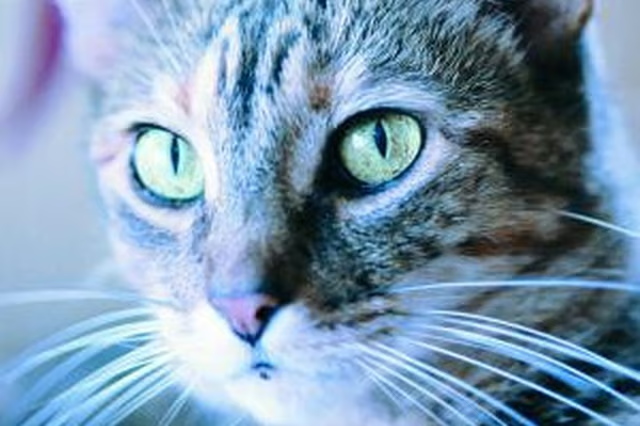
The whiskers on your face are a lot different from the ones on your pet's. Dogs and cats use their whiskers for different purposes, giving them an overall better sense of their environment. Without them, their confidence and even their motor skills can suffer.
Sense of Touch
Think of everything you touch over the course of a day, and how you experience different textures, weights and shapes. Now imagine not having hands or fingers, like your cat or dog. With all four paws planted on the ground, a dog or cat uses her whiskers to sense her environment, feeling different surfaces and getting a sensory understanding of her surroundings. Without her whiskers, she wouldn't have any way feeling her environment.
Navigation
If you're ever walked through a dark room with your arms outstretched, you understand what whiskers do. Cats and dogs have to be able to navigate in the dark, and their whiskers play a big part in that. Cats have especially sensitive whiskers, which they can use to measure distance and sense vibrations in the air. In a darkened room, an animal's whiskers give it a virtual sixth sense.
Risks of Trimming
Some groomers and show animal owners favor trimming an animal's whiskers for aesthetic purposes, but this does your pet a major disservice. Your cat doesn't have whiskers to be stylish -- she has them so she can navigate her world. Trimming an animal's whiskers can throw off her equilibrium, impair her depth perception and cripple her confidence.
Health Signals
Whiskers can serve a valuable purpose not only for your pet, but for you, too. The state of your pet's whiskers can tell you about her overall health. Split ends and droopy whiskers can indicate poor health or unhealthy weight loss. And while your pet can and will shed whiskers, if they don't grow back within a few weeks, it could be a sign of a vitamin deficiency. If your pet's whiskers seem unhealthy, have her see a vet.
Always check with your veterinarian before changing your pet’s diet, medication, or physical activity routines. This information is not a substitute for a vet’s opinion.
