


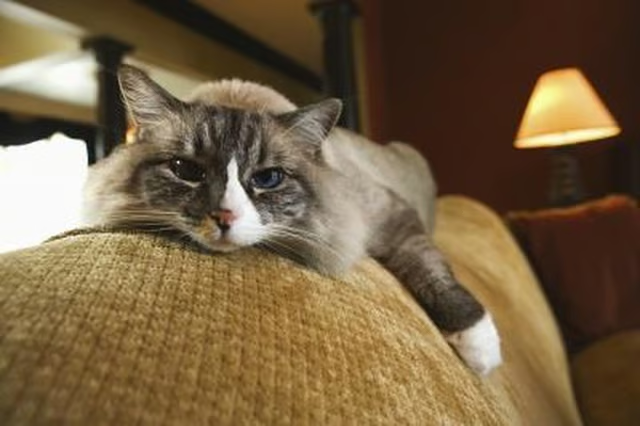
Cats rely on their claws for more than you may realize, from self-defense to stretching and getting physical exercise. With aging, you may notice that your fluffy friend's claws are not as strong as they used to be. Senior cats tend to have significantly weaker claws than their younger counterparts.
Hardening
According to the Cornell University College of Veterinary Medicine, elderly cats' claws do not actually become softer with age. In fact, the reality is quite the opposite. When felines get older, their claws tend to take on a much harder and more brittle texture.
Weakening
Feline claws also become significantly weaker with age, despite their harder textures. If you notice that your little fluff ball's claws seem to break and split with much more ease than in previous years, don't scratch your head in confusion -- this brittleness is just a normal part of being a senior cat. Excessively dry nails are also a sign of aging in the feline world.
Nail Bed Problems
If your elderly cat's claws are especially soft, the condition could be a result of a possible nail bed problem such as the infectious paronychia rather than pure aging. The softness could be related to swelling around the claws or to misshapen nail plates. If you suspect either of these may be the issue, schedule an appointment with your veterinary immediately to investigate your kitty's claw situation.
Prevention
Since feline nails can soften due to infection in the nail beds, you'll want to be extra-vigilant. Let a vet or groomer clip your cat's nails if trimming is necessary. When the claws are trimmed too closely, they may become especially prone to nail infections. Diligently remove dirt you notice around your cat's claws. Use tweezers. If you ever notice any possible infection symptoms on your cat's paws -- such as the presence of pus or blood -- take her to the vet for an exam as soon as possible.
Always check with your veterinarian before changing your pet’s diet, medication, or physical activity routines. This information is not a substitute for a vet’s opinion.
