


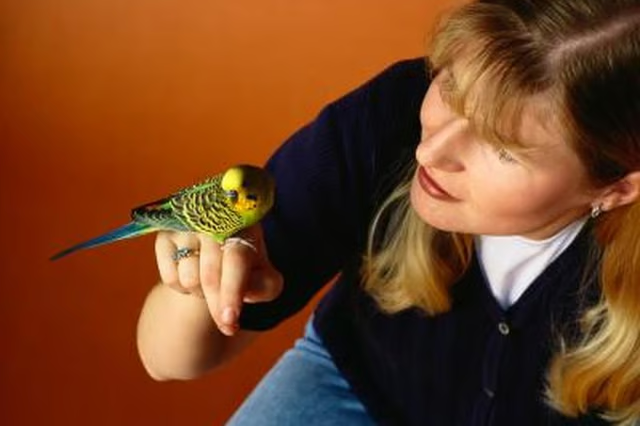
Parakeets, also called budgies and budgerigars, need to be with their mommas from hatching until they're between 2 and 3 weeks old. Then you can hand-feed Charlie yourself, get acquainted and help him learn to eat adult food. Having expert support makes hand-feeding safer for first-timers.
First Weeks
Until he's 2 or 3 weeks old, it's healthier for Charlie to stay with his momma. Her first feeds are crop milk, full of nutrients and antibodies that help him fight off disease, and he needs constant day and night feeding. Staying close to momma also helps keep Charlie warm and safe. Baby parakeets aren't very active and they need extra heat to stay warm. Their tiny size makes it easy for humans to hurt them too.
Starting Hand-Feeding
At 2 weeks old, Charlie's ready for you to take over from momma, but he needs extra help keeping warm. Leave him until he's 3 weeks old, and you won't need to supply extra heat. Parakeets between 2 and 3 weeks old need to eat every three or four hours, and an eight-hour break at night. At 2 weeks old babies need 2 to 3 milliliters of formula each feed, increasing to 4 to 5 milliliters at 3 weeks. Parakeets older than 3 weeks can find it hard to get used to hand-feeding.
Weaning
Charlie's a little easier to feed at 4 weeks old. His schedule is once every five hours and an eight-hour nighttime break. He eats 5 to 6 milliliters of formula at each feed, and he can start nibbling on weaning foods. Offering a variety of foods, such as millet sprays, small pieces of vegetables and fruit, and chopped hard-boiled egg, helps him get used to new flavors. Parakeets usually wean by about six weeks, refusing formula feeds.
Care Tips
Cold formula makes chicks ill, and hot formula burns them. Between 105 and 110 degrees Fahrenheit is ideal. Check your birds' crops at every feed by feeling under their breast feathers. Food sits in the crop before moving into the intestines. Babies can continue eating after they're full, and overfilling crops cause serious problems. In a correctly-fed bird, the crop feels full but not firm, with some "give." Babies need to empty their crops completely every 24 hours.
