


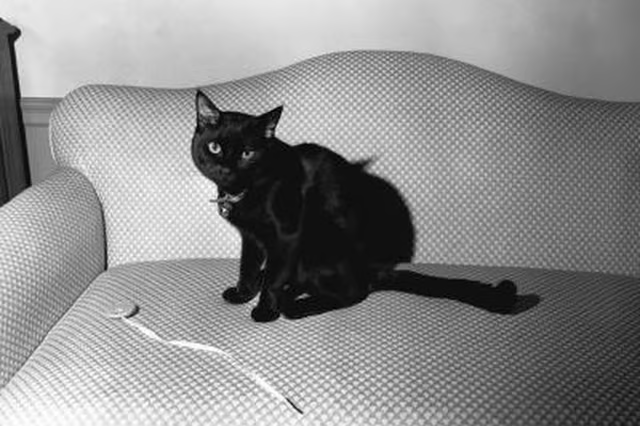
If you're plenty familiar with cats as a species, you've probably witnessed humping behavior. Although the hormonally charged conduct is certainly a little on the embarrassing side, it is by no means cause for alarm. You can relax.
Hormones
Unfixed male cats, much like teenage boys, are essentially walking hormones, ready to mate at any random time of day. Humping is an outlet for a cat's built-up sexual energy, whether directed at another feline, a dog, a favorite toy or your leg. Apart from mounting, physically mature male cats participate in a lot of other hormonally motivated actions, including urine spraying, aggressive physical fighting, antsy wandering and persistent yowling.
Neutering's Effect
Neutering a male cat stops or at least reduces humping, generally speaking. Once a cat is fixed, he's liable to take on a significantly more mellow and relaxed disposition since his hormones won't be inducing the urge to seek out females for mating. After neutering, his stuffed-toy humping and other sexual-simulation acts will diminish -- but not immediately.
Humping May Continue
Although fixing a male cat usually puts an end to mounting actions, it may take time. Hormones don't leave a male cat's body immediately. You may notice your cat humping toys not long after recovering from his surgery. It may take several weeks for a male cat's mating urges to subside, and during that time, he still will be able to impregnate a queen. The East Bay SPCA reports male cats may remain reproductively capable for up to a month and a half after neutering. Don't let him near other cats for a while after neutering. In some cases, the humping behavior subsides but doesn't cease completely.
Prevention
Consider getting your male cat neutered before the age of 6 months or so. Early neutering can stop hormonal behaviors such as conspicuous toy humping before they start. Ask for your veterinarian's suggestions for the safest and most appropriate neutering time for your individual cutie.
Always check with your veterinarian before changing your pet’s diet, medication, or physical activity routines. This information is not a substitute for a vet’s opinion.
