
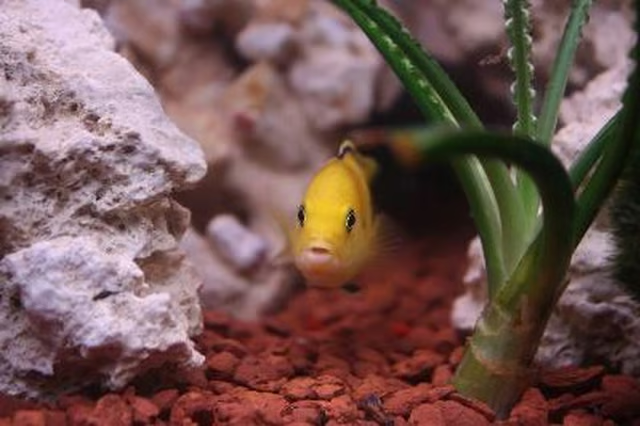
If you are looking for your first fish together, the brightly colored lemon cichlid is a good choice. Not only is this beautiful fish hardy, it is one of the least aggressive of the species. The lemon cichlid has an interesting origin, bright appearance and ability to live long in captivity.
Origin and Appearance
The lemon cichlid, or neolamprologus leleupi, is also sometimes referred to as the gold cichlid. It originates from the warm, rocky freshwater of Lake Tanganyika in East Africa. It varies in hues of yellow and reddish-orange, but is most commonly found in bright, canary yellow. The lemon cichlid may have darker coloring around its mouth and fins, which are fan-shaped. This robust little fish has a long body that ranges in size from about 4 to 5 inches in length (10 to 13 cm). It can be distinguished from other yellow cichlids such as the electric yellow cichlid, by its long, pointy mouth and large lips.
Temperament and Tank Mates
In its natural habitat, this vibrantly colored cichlid cohabitates with a variety of other Tanganyikan cichlids such as the lyretail and frontosa. Though the males can be territorial, the lemon cichlid is usually a calm, passive fish. When kept in aquariums, this species will get along with other cichilds of similar size that are not overly aggressive. The lemon cichlid does not do well with Lake Malawi or Lake Victoria cichlids that tend to have aggressive temperaments.
Tank and Diet Requirements
Though the lemon cichlid is not a very large fish, it enjoys room to exercise its ability to be an agile, active swimmer. A tank that is at least 30 gallons (114 l) will give this little guy the room he needs to enjoy his watery home. Water temperatures ranging from 74 to 82 degrees Fahrenheit (24 to 28 degrees Celsius) will mimic the original African home of this Tanganyikan cichlid. A pH balance of 7.6 to 9 is ideal because this species thrives in acidic water with high mineral content similar to the sandy water of Lake Tanganyika. This omnivorous fish enjoys pellets and flakes that are formulated for cichlids, supplemented with occasional brine shrimp or aquatic insects to maximize its yellow hue.
Breeding and Life Expectancy
If you have lemon cichlids that you would like to have reproduce to form an aquarium full of these bright beauties, starting with a school of at least six will help you achieve your goal. The species is monogamous and forms bonded pairs. They will lay eggs in a tank with plenty of hiding spaces and crevices for the females to go during spawning. With proper care, lovely lemon cichlids have the potential to reach the ripe old age of 9 years.
