


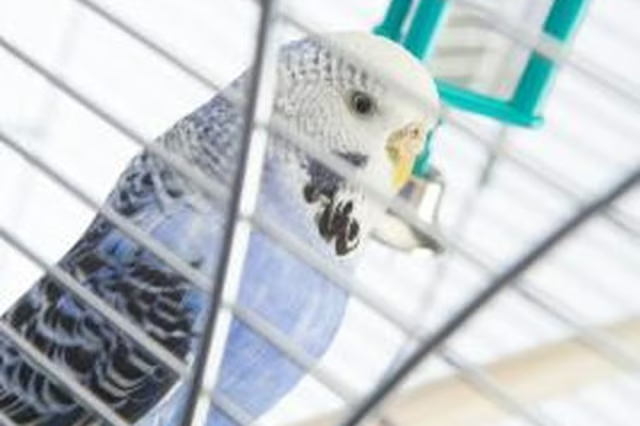
When it comes to living spaces, parakeets, like many humans, think no place is too big. They're playful, active birds and appreciate room to fly around in. How big a cage you buy depends on the number and size of parakeets you have. Parakeets are also called budgies and budgerigars.
Basic Accommodation
Length is more important than height when it comes to parakeet cages because birds mostly fly horizontally rather than up and down. For one parakeet the minimum size cage you should get is 20 inches long, 18 inches deep and 18 inches wide. A pair of parakeets need a cage 30 inches long, and the same deptth and height, while a cage for six parakeets should measure at least 40 inches long, 18 inches deep and 32 inches high.
Group Accommodation
Accommodating large numbers of parakeets requires some calculation. Each bird you add to your flock needs an additional 4,000 cubic inches of space in the cage. To keep lots of parakeets, you may want to consider an aviary, which is a large cage set up at floor level. Each parakeet in an aviary needs roughly 21 square feet of space to fly in. You can work out cubic feet and inches by multiplying length, depth and height.
Bird Size
Although the most familiar parakeet is the Australian budgerigar, there are other, larger members of this species that need more space per bird. The monk parakeet, also known as the quaker parakeet, grows up to 12 inches long. Even larger is the Indian ringneck parakeet, which measures 16 to 17 inches in length. A single pair of medium-size parakeets need a cage measuring 59 by 32 by 59 inches.
Cage-Buying Tips
Generally, the larger the cage, the happier your parakeet will be, so you should buy the biggest cage you can afford. As a bare minimum, the cage should be large enough that your feathered friend's head doesn't touch the top and his tail doesn't touch the bottom. He should also be able to move unrestricted. As well as accommodating your bird, his cage needs to be big enough to hold food and water containers, perches and toys.
