


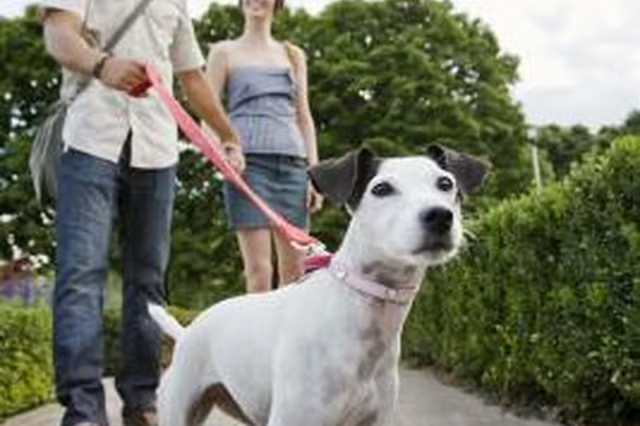
Walking your dog and watching him play with other dogs is a simple joy that dog ownership bestows every day. But your dog can ruin this for you and himself if he doesn’t behave nicely toward other dogs. Fortunately, you can teach him some manners with a few basic adjustments to your walk.
Causes
Some dogs, like the Siberian husky and spitz breeds, are instinctively compelled to pull. It’s in their nature because of their history as sled dogs. Other dogs pull because they’re excited and can’t contain themselves at the sight of a potential new playmate. Some dogs will pull and jump in an aggressive manner because they don’t like other dogs. They haven’t yet figured out that strange dogs are just friends they haven’t met yet, but their rude behavior always sets them off to a bad start.
Reasons to Discourage Pulling and Jumping
Controlling your dog when in public is your responsibility. A hyper dog who pulls and jumps at other dogs is a menace, especially if he’s a large breed like a rottweiler or Great Dane. As well as ruining the walk for you and alarming other dogs, your dog will find the whole process stressful and frustrating.
Training
You can teach your dog leash etiquette when around other dogs in a few simple, kind steps. Walk him in the yard, away from other dogs. Praise him when he’s passive and gently tug on the leash when he begins to pull away to distract him and cease praising him. He’ll learn that walking by your side results in praise, while pulling results in the positive stimulus of verbal praise being taken away. This is called negative punishment. Removing the positive stimulus is kinder than introducing a negative stimulus. With sufficient repetition, he’ll learn to walk nicely in order to get the praise. Take him to the park and use the same principles to discourage him from pulling and jumping when he sees another dog. Reward him verbally when he’s calm and polite and remove the reward when he acts out.
Useful Equipment
Training large, powerful dogs to walk nicely can be a challenge, purely because tugging the leash does little to control their movement. No-pull harnesses are useful in such cases because they take the dog’s own forward momentum and transfer it to his shoulders, forcing him sideways every time he applies too much pressure to the leash by pulling and jumping. Since the harness stops him pulling away and frustrates his attempts to move forward, he’ll learn that pulling is both fruitless and disorientating.
