


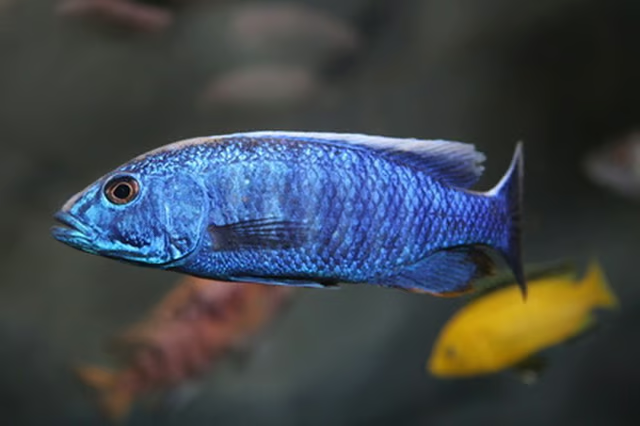
Cichlids become aggressive when they are mating: The dominant male chases other males and his female mate. Cichlids that chase each other in a frenzy are most likely performing the ritual mating dance.
Step 1
Observe the dominant male cichlid. The dominant male becomes more aggressive to other males before mating with a female. Your dominant male's color will become pale in comparison with his normal bright color.
Step 2
Watch the male’s actions. The dominant male cichlid chases the female in an aggressive manner. He protects her from other fish and puffs up to chase other males away from her.
Step 3
Look at the rocks in the bottom of your aquarium. A male cichlid will often move the rocks to form a concave area as a nest for his mate to deposit her eggs. Cave-dwelling cichlids will swim in and out of a cave in the aquarium, and rock dwellers will continually pass over a flat rock in the aquarium.
Step 4
Notice the female deposit her eggs. You may need a magnifying glass to see the tiny eggs that she deposits as she waves her tail frantically. A female mouth brooder cichlid sucks the eggs back into her mouth. The male does a mating dance in front of her to show her the spots on his rear lower anal fin, which look like eggs. As she follows closely to him, he fertilizes the eggs in her mouth. She will harbor the eggs in her mouth until they hatch.
Step 5
Observe a male cichlid that is not a mouth brooder. He will hover over the eggs that the female laid and fertilize them. The female will then guard her eggs until they hatch.
