


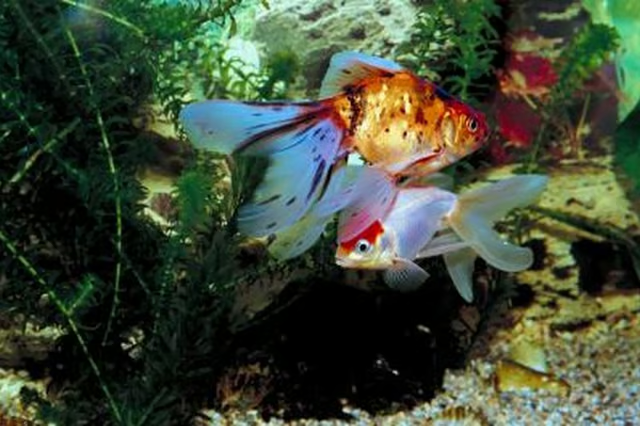
Goldfish inhale and then spit their food out for many reasons. The simplest answer is that your fish is full, or would like a change in his food selection. You would not want to eat the same food every day and he might like a variety.
Food Type
Most goldfish are not normally fussy eaters and will gobble up any type of food you give them. On occasion, a goldfish may spit out food if he does not like it. Try a different form of food. Goldfish foods are available in flakes, pellets, crumbles, crisps and freeze-dried varieties.
Mouth Problems
Goldfish like to pick up rocks from the aquarium bottom and suck the algae off them. A rock can be stuck in your goldfish’s mouth that he cannot spit out. This makes eating his food quite a task. Remove the goldfish from his home and gently try to open his mouth. If you see a rock inside, gently remove it with small tweezers.
Gill Problems
Fish need to flex their gills while eating. Gill parasites can disturb this motion and he will spit out his food. Other outward signs such as a slimy coat or spots may accompany parasites on the fish. Examine your goldfish with a magnifying glass to determine if treatment is necessary.
Infection or Illness
Fish that are lethargic and swim slowly may spit food out, as they are too tired to eat. Examine your fish tank and take note if he is the only fish that is not eating or several are not eating.
Water Quality/Stress
When a goldfish is under stress he may eat less than normal. Stress occurs if other fish are picking on him or chasing him. Fish also undergo stress if water conditions are not favorable for good health. Check the filter and pump for proper operation. Clean the fish tank and gravel and do a water change to remove excess ammonia. Perform a water test for nitrates, nitrites and pH level. Adjust the levels to 70 degrees Fahrenheit and a pH level of 7. Properly operating pumps and filters along with weekly water changes will keep nitrate and nitrite levels at an acceptable range of 50 and 1 mg respectively.
