
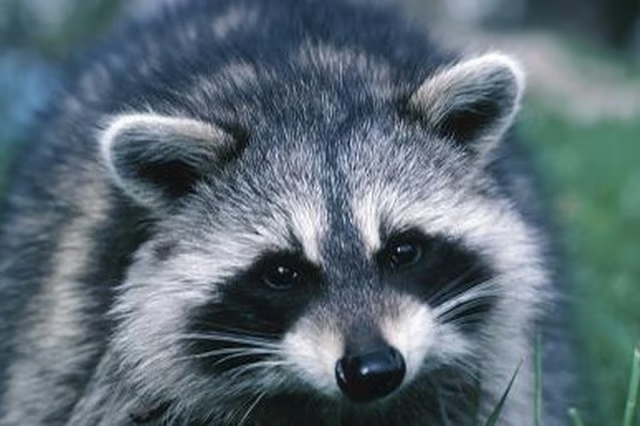
When your precious kitty encounters a night-roaming raccoon, they'll usually get along just fine -- whether they simply nod to each other and go their separate ways, or become good pals and eat out of the same bowl. But there are good reasons to keep them apart anyway.
Friend vs. Foe
There's an information war -- fueled by urban legends and misunderstandings -- over whether kitties and coons are friends or foes.
Raccoons are mainly scavengers. They do kill some small prey, but they find most of the meat they eat. They might occasionally kill kittens or very small cats, but for the ones caught eating dead cats, the evidence is circumstantial.
In almost all cases, raccoons and cats get along fine. They not only tolerate each other, they sometimes eat out of the same dishes, which is why animal control offices around the country condemn feeding cats outside. Outdoor feeding is even illegal in some cities.
Social Diseases
Unfortunately for these star-crossed animal buddies, raccoons and cats can share diseases as easily as they share food. Raccoons can carry feline distemper (feline panleukopenia). They also can catch it from your unvaccinated cat and spread it to other raccoons or other cats.
Scariest of all, raccoons are a rabies vector. So it's really important to make sure your cat is vaccinated; keeping your kitty disease-free protects local wildlife and other cats. Raccoons can also carry seriously yucky and potentially dangerous roundworms.
Your Cat's Food
Most cat-raccoon meetings happen over food. Your outdoor cat's food is just downright irresistible to these omnivorous scavengers. If you feed your kitty outside and it attracts raccoons, they'll keep coming back for more tasty treats.
As cute as this is to watch, allowing raccoons to eat your cat's food is ill-advised. Not only is it strongly frowned upon by animal control departments and probably by your neighbors, it can harm the raccoons. Wild animals that become dependent on handouts are less capable of surviving on their own. Food by your house encourages them to hang around and sample the contents of garbage cans, gardens and compost bins, and to check out your chimney and attic.
These nocturnal visits can also put your new buddies in the paths of dogs, cars and human beings who aren't as friendly to nighttime marauders as you are.
Your Cat's Door
A raccoon is not a pet and should never be brought into your home. Yet even if you don't invite them in, you might wake up one morning to find you've been burglarized by a 20-pound criminal, or you might confront an aggressive, frightened wild animal inside your home. A cat door is a raccoon entry point.
If you have raccoons around your home, the safest bet for all concerned is to bring your kitty's food inside, and rig that cat door closed until your wild pals find a better place to hang out at night.
Always check with your veterinarian before changing your pet’s diet, medication, or physical activity routines. This information is not a substitute for a vet’s opinion.
