
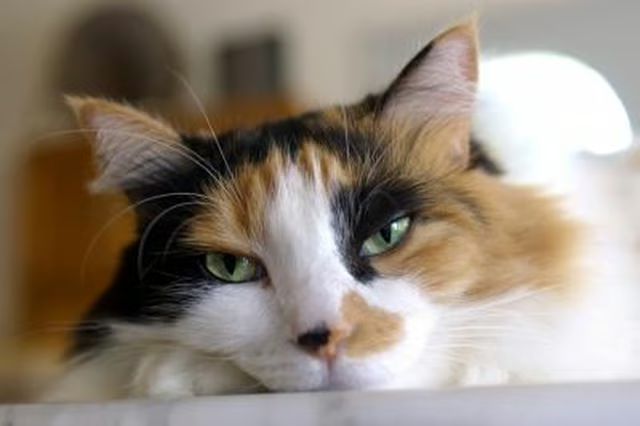
Every animal's pupils dilate, meaning they appear to grow bigger, in low light. Your cat is no exception. Your cat's eyes have unique features, however, that make dilation especially dramatic in your furry friend.
Contracting Sphincters
The pupil is the part of the eye that lets light in. It's the black part in the middle. The colored part, or iris, has a complex network of muscles that open and close the pupil like a sphincter -- or like the iris of a camera, which is named after this part of the eye. The iris reacts to light levels and to subtler things, such as emotions. Some illnesses, drugs and other chemicals affect the behavior of the iris. It looks like your kitty's pupils get bigger and smaller, but it's more accurate to say it's her iris that expands and contracts.
Blocking Out the Sun
Cats evolved to capture prey at night and to otherwise hunt in low levels of light, such as at dusk and dawn, in dark grain silos, behind the bookcase and any shady or dark space. Their eyes' workings are among a few special adaptations to their stalking lifestyle. Cat pupils expand to take up almost the entire eye and contract down to the narrowest slit. This range is greater than the pupils' of most other mammals.
Cats actually see better in levels of light that look pretty dim to us. If there's too much light for her eyes to work well, your cat will "darken" their vision by closing down the irises and squinting the eyes. When light levels are very low -- pitch black to us -- she'll expand her pupil and open her eyes wide to let in the maximum amount of light. This way she can function as well in the dark as we can in broad daylight.
Mirror Mirror
Besides their magically expanding pupils, cats have a "mirror" in the back of each eye, called the tapetum. This organ reflects light back onto the retina, the part of the eye that "sees" images and sends this info to the brain, so the retina gets a double dose of light entering the pupil. The tapetum gives the eyes a green reflection in the dark.
What're You Looking at?
Cats' big ol' pupils aren't just for seeing mice at night. They communicate emotions, too. Cats can expand their pupils any time, day or night, in light or dark. If the ambient light is normal and your kitty's pupils are big and round, you can be sure she's excited about something, extremely interested, or especially fearful or aggressive. In each of these cases, large pupils are a warning that you might get swiped the second you get within paw's reach.
Always check with your veterinarian before changing your pet’s diet, medication, or physical activity routines. This information is not a substitute for a vet’s opinion.
