


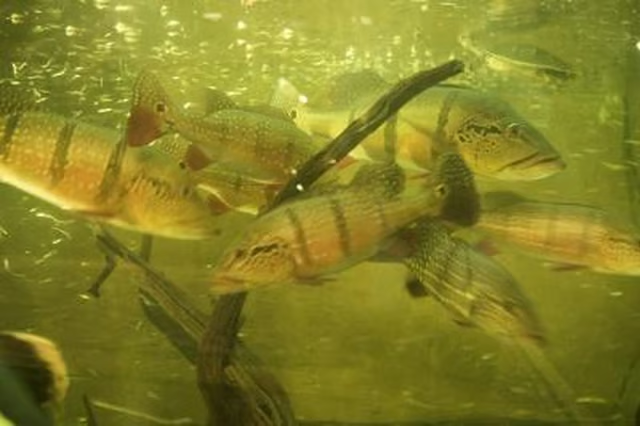
African lungfish aren't an especially challenging species to care for, but they're large and will need a lot of space. They've also been known to live for over 20 years in captivity, so you'll need to be prepared to have a long-term fishy friend.
Aquarium Setup
African lungfish can reach up to 40 inches in length in the wild; they're not so big when kept in aquariums but can still be over 30 inches long. At an absolute minimum, she'll need a tank of 72 inches by 30 inches, or 1,060 liters in capacity. She'll also need a muddy or sandy substrate and will like her tank decorated with some large, smooth rocks, as well as some roots and driftwood. Be sure to securely fix the tank's lid in place, as these fish have a tendency to escape.
Water
African lungfish have adapted to survive in poor quality water. You should still make sure to maintain a good water quality in your tank, but don't worry too much about being precise with temperature and pH. Aim to keep the temperature between 76 and 86 Fahrenheit and the pH neutral at around 7.0. The hardness should be roughly 10 degrees of general hardness (dGH) or below. Ensure you leave a gap of 6 inches between the water and the top of the tank so your lungfish has room to get some air.
Food
African lungfish are omnivorous and relatively easy to feed. They'll accept all kinds of meat foods, such as mussels, worms, insects, prawns and, once your lungfish gets larger, whole fish like sprats or trout. They'll also eat a range of plant matter, such as algae wafers, and some will eat pellet food once accustomed to it.
Tank Mates
The African lungfish is best kept completely alone. They don't get on with other lungfish and they certainly shouldn't be trusted in a community tank. They're large and aggressive and will take a bite out of another fish without warning. Even those who've been successfully living with other aquatic creatures for some time have been known to turn against their tank mates.
