


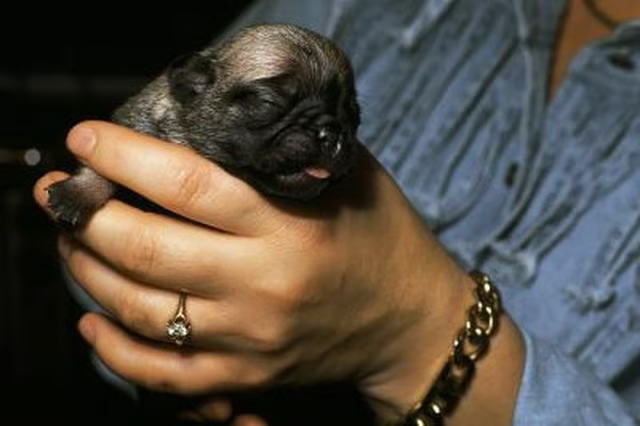
The runt of the litter is a tear-inducing concept that actually is a true reality -- the littlest furry baby vying for his mama's undivided attention and love amidst his bigger and seemingly stronger and tougher siblings. Not every litter of puppies and kittens necessarily has a wee runt, however.
Not All Litters Have Runts
Not all litters have runts, notes Julie Meadows, a veterinarian at the William R. Pritchard Veterinary Teaching Hospital of UC Davis. However, when they do have runts, there never is more than one of them. This applies to litters of both kittens and puppies. The concept of multiple runts per litter is, essentially, a nonexistent one.
Reason for Runts
When runts do appear in litters, the reasoning is related to the mama animal's uterus, which is formed like the letter Y. The babies in the womb who are situated nearest to the blood are lucky enough to receive ample levels of sustenance, while the babies situated in the middle section of the uterus, on the other hand, receive lower levels. These differences in positioning result in noticeable size differences within the litter -- with the babies in the middle being markedly tinier than the rest.
Life as a Runt
Although life as a runt might be a little more difficult initially, the story doesn't have to end that way. Since runts are considerably smaller than their brothers and sisters, it isn't as easy of them to gain access to their mother dog, and therefore to feeding and crucial body warmth. Their larger littermates often shove them out of the path to mama, and since they're so fragile, they can't always stand up for themselves. It isn't rare for their siblings to literally walk all over them, either. Bullying of litter runts, unfortunately, is an all too common scenario in both puppies and kittens.
Mother Animals and Runt Rejection
Mother cats and dogs are extremely instinctive creatures, and their senses regarding their youngsters are often spot-on. Litter runts are sometimes rejected by their mothers because their mothers have reason to believe they have low odds of survival and staying healthy. This doesn't always happen, however, and runts that get proper nourishment from their mamas often grow up to become perfectly happy and healthy young cats or dogs.
Always check with your veterinarian before changing your pet’s diet, medication, or physical activity routines. This information is not a substitute for a vet’s opinion.
