


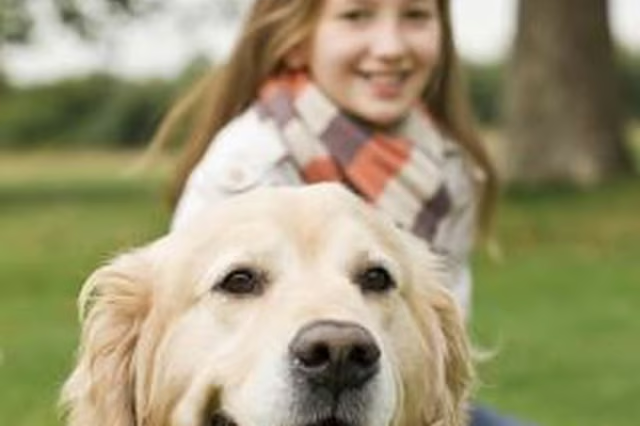
Dogs do show happiness outwardly, but not necessarily using their mouths. When a dog feels genuinely at ease, he may actually position his mouth in a way that truly resembles a smile. But he might make such a face when he's not really at ease, too.
Smiling Dog
Body language can be an effective gauge of how at ease a dog feels. Happy dogs have a general looseness to their bodies, and that applies to the mouth area, too. If the sides of your pooch's mouth point slightly higher than the rest of it, that often -- but not always -- signifies that all is wonderful in your dog's world for the moment. More telling is your dog's tongue. A loose-hanging tongue combined with a mouth slightly ajar generally points to a good moods in a doggy, according to the Caring Hands Humane Society website. Although dogs don't actually smile like humans, they sometimes happen to make expressions that look like smiles.
Anxiety and Smiling
A smiley expression in a dog doesn't necessarily indicate happiness. If your dog's mouth is open just a tad, with the sides raised, he may indeed look like he's smiling, but he may actually be anxious, nervous or otherwise in distress. Signs of distress accompanying a stiff smile include heavy panting with the tongue in, whining and chattering teeth. Consult your vet.
Subordination and Smiling
A dog may also give the false impression of smiling in subordinate situations, according to the ASPCA. If a dog is threatened by another animal or human that he feels is higher in ranking, he may attempt to show his subordination by raising his lips in a nonaggressive display. It's a different baring of the teeth than an aggressive one, and the dogs know the difference. It has the appearance of a smile, but the poor pooch is scared. Look out for other "hints" of subordination, including crying, pushed back ears and a hanging head. Make sure the upper portion of the doggie's snout isn't crinkled. That sometimes is a belligerent body language signal to back off.
Tail-Wagging
Although smiling may not always point to canine happiness, several other body language actions do. The classic sign of a happy canine is the wagging tail. When a dog moves his tail back and forth, his emotions can range from peaceful to absolutely giddy. Not all tail movement is positive, though. Dogs sometimes wag their tails in a quick, stiff motion if they're anxious, uncertain or apprehensive, for instance.
Other Expressions
Another way in which doggies frequently show pleasure is by rolling their bodies around over the floor. If your dog does this, you can be pretty certain that he's having a nice moment. Happy dogs also sometimes position their ears upward. This often denotes attentiveness, too. Something interesting if not fun is about to happen, whether lunchtime or play or a mailman, and he just can't wait to get started.
Always check with your veterinarian before changing your pet’s diet, medication, or physical activity routines. This information is not a substitute for a vet’s opinion.
